
National Heritage Assessment of Binthi Warra Indigenous Heritage Places
National Heritage List
Australia’s National Heritage List is a list of Indigenous, natural and historic places of outstanding significance to the nation.
Our National Heritage places capture the achievements, joys, and sorrows of Australians – past and present. Inclusion in the National Heritage List is the highest heritage honour in Australia. All the places on the list have ‘outstanding heritage value’.
‘Outstanding heritage value’ means a place has unique characteristics and special meaning. Each place has an importance that extends beyond its state, territory or community. The criteria for assessing National Heritage values are set out in the Environment Protection Biodiversity and Conservation Act 1999 (EPBC Act).
There are currently over 120 places on the National Heritage List. Places listed for their Indigenous values include:
• Wave Hill Walk-Off Route
• Coranderrk
• Brewarrina Aboriginal Fish Traps (Baiame’s Ngunnhu).
Assessment of Binthi Warra Indigenous Heritage places Thamaan and Yirmbal (Binthi Warra)
The Australian Heritage Council (AHC) assesses places against set criteria. This determines if they are of outstanding heritage value to the nation. The AHC then advises the Minister for the Environment and Water on the potential National Heritage values of the place.
The Binthi Land Holding Group Aboriginal Corporation (BLHGAC) nominated Binthi Warra for inclusion in the National Heritage List in 2021. The AHC is currently conducting its assessment.
Proposed National Heritage Values
Places nominated to the National Heritage List must meet one or more of 9 National Heritage List criteria.
The AHC has found Binthi Warra might have National Heritage values under criteria (a), (b), (c), (e), (g) and (i). This is based on a preliminary assessment showing potential National Heritage values. The proposed National Heritage listing and the assessed values are now open for consultation.
Criterion (a): For the story of the Guugu Yimithirr’s internment during World War II. The forced removal from Country represents a unique narrative of forced transportation by the Armed Forces of the time. This was in response to allegations of the community aiding and abetting enemy forces amidst the growing national fears of the threat of invasion.
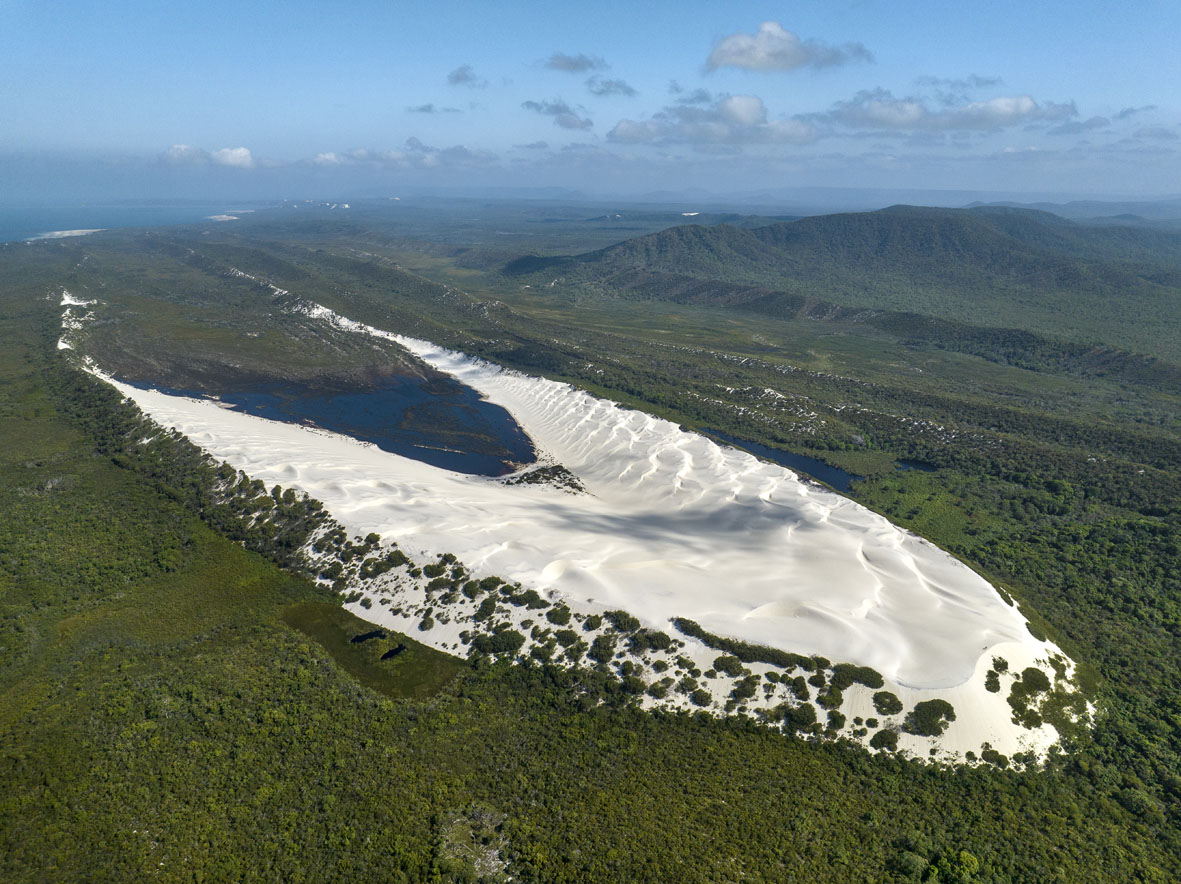
Criterion (b): For its rarity of its coastal dune systems. The sand country of Cape Bedford and Cape Flattery is noted to contain some of the best/ most intact examples of large elongate parabolic dunes and coastal dune lakes in Cape York.
Criterion (c): For the dune system’s high potential and value as a research site.
Criterion (e): For its aesthetic characteristics relating to the pristine dune systems and associated landforms within the area. The Binthi Warra clan of the Guugu Yimithirr people hold this place in high regard for its striking and spiritually significant natural features. The Country displays an exceptional aesthetic that is deeply valued by the community, reflecting both its pristine condition and enduring cultural importance.
Criterion (g): For the Guugu Yimithirr’s strong association with the place for cultural and spiritual reasons.
Criterion (i): For its importance as a place of considerable cultural and natural significance to the Guugu Yimithirr people.
Free, Prior and Informed Consent
The AHC must consult and get Free, Prior and Informed consent (FPIC) when including Indigenous heritage values in the National Heritage List. This ensures the most up-to-date and appropriate information for Indigenous values is considered.
The AHC are consulting with the Guugu Yimidhirr People (Traditional Owners of the nominated area). Input from other First Nations peoples with a right or interest in the nominated area are also sought.
Location
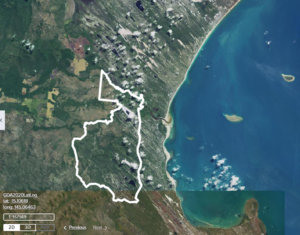
Binthi Warra is situated approximately 30 kilometres northeast of Hope Vale Aboriginal Community. Binthi Warra is located near the Gubbins and Audaer Ranges, McIvor and Morgan Rivers, and between Cape Flattery and Cape Bedford. The area is within the Hope Vale Aboriginal Shire Council and the Hope Vale Congress Aboriginal Corporation [RNTBC] areas.
The map below shows the approximate area being looked at for the National Heritage List (in blue).
Boundary modifications may occur during consultation for the National Heritage assessment. This may occur as significant places areas are discussed with knowledge holders. Knowledge holders may include Binthi Elders, neighbouring groups, and other community members. Areas that may be added to the boundary include the mountain range adjacent to the current boundary and significant caves. This will be an ongoing process as part of the National Heritage assessment.
What would National Heritage listing mean?
Places on the National Heritage List receive national attention. The Australian Government may provide financial or other assistance toward the promotion or conservation of places in the National Heritage List.
Listing does not necessarily prevent development. It seeks to ensure that the place’s outstanding heritage values are considered in decisions around development and other actions.
National Heritage listing does not change land tenure, or ownership. Low impact recreational activities currently allowed will be unaffected.
What protection does National Heritage listing give?
Places are included in the National Heritage List through the EPBC Act.
The EPBC Act protects the identified National Heritage values of a place, not the place as a whole. Under the Act, any potentially significant impacts on the National Heritage values must be considered before approval of actions.
Listing does not mean that a place cannot be developed or changed. If the development or change could have a significant impact on the National Heritage values of a place, permission must first be sought from the Australian Government. In applying for approval to change or develop a National Heritage place, applicants are required to consider how they might avoid, minimise or offset any impacts.
How can I make a submission?
The assessment of National Heritage values under the EPBC Act requires that all practicable steps are taken to advise:
• owners
• occupiers
• Indigenous people with rights and/or interests in the place.
This provides the opportunity to comment on whether the place should be included in the National Heritage List.
You are invited to submit your feedback via the Have Your Say page https://consult.dcceew.gov.au/binthi-warra-indigenous-heritage-places
Feedback submissions will open at 9:00 AM AEST 11 June 2026, and will close at 5:00PM AEST 31 July 2026.

Written comments or requests for more information can be emailed to [email protected]
Alternatively, written comments can be posted to:
Australian Heritage Council
GPO Box 3090
CANBERRA ACT 2601
What are the next steps?
After the submission period, the AHC will advise the Minister for the Environment and Water on the potential National Heritage values of Binthi Warra. The Minister will then decide whether to include the place in the National Heritage List, taking into account the AHC’s report and submissions collected through this consultation process. The minister may also seek, and have regard to, information or advice from any other source.
Read more
• The National Heritage listing process – DCCEEW
• Australia’s National Heritage List – DCCEEW
• National Heritage List criteria – DCCEEW
• Free Prior and Informed Consent – DCCEEW.